Wondering if a few extra acres in Lincoln County could give you the space you want, only to realize rural property comes with a lot more questions than a house in town? That is a common place to be. When you buy acreage, details like road access, water, septic, soil, and boundary records can shape your plans just as much as the price or the view. If you know what to check before you make an offer, you can move forward with a lot more confidence. Let’s dive in.
Why Lincoln County acreage is different
Lincoln County sits in eastern Central Oklahoma, with Chandler as the county seat, and the county notes that it is part of the Oklahoma City metro area. That mix can appeal to buyers who want more room while still keeping access to nearby communities and services.
Still, acreage here often works differently than a neighborhood lot. Instead of relying on a subdivision-style process, you may need to pay closer attention to county roads, utility crossings, floodplain review, tax records, and recorded documents tied to the land.
That is why the first walkthrough should never be just about what you see from the gate. In Lincoln County, what is in the public record can be just as important as what is on the ground.
Start with county records
Before you make an offer, pull the basics from Lincoln County’s public tools. The county assessor site offers parcel search and an interactive map, and the county website links land records and tax records.
These records can help you confirm ownership, parcel layout, and basic tax information. They are also a practical starting point for finding recorded surveys, deeds, plats, easements, and any restrictions that may affect how you use the tract.
If you are comparing more than one property, this step can save you time fast. A tract that looks simple in person may have access questions, utility easements, or boundary issues that only show up in the record.
Check access before anything else
Confirm legal access
One of the biggest acreage mistakes is assuming a property is easy to reach just because you can drive to it. What matters is whether the tract has legal access from a county road or through a recorded easement.
Lincoln County commissioners maintain county roads and bridges. If access depends on crossing land that is not clearly documented, you will want answers before you move forward.
Ask about right-of-way work
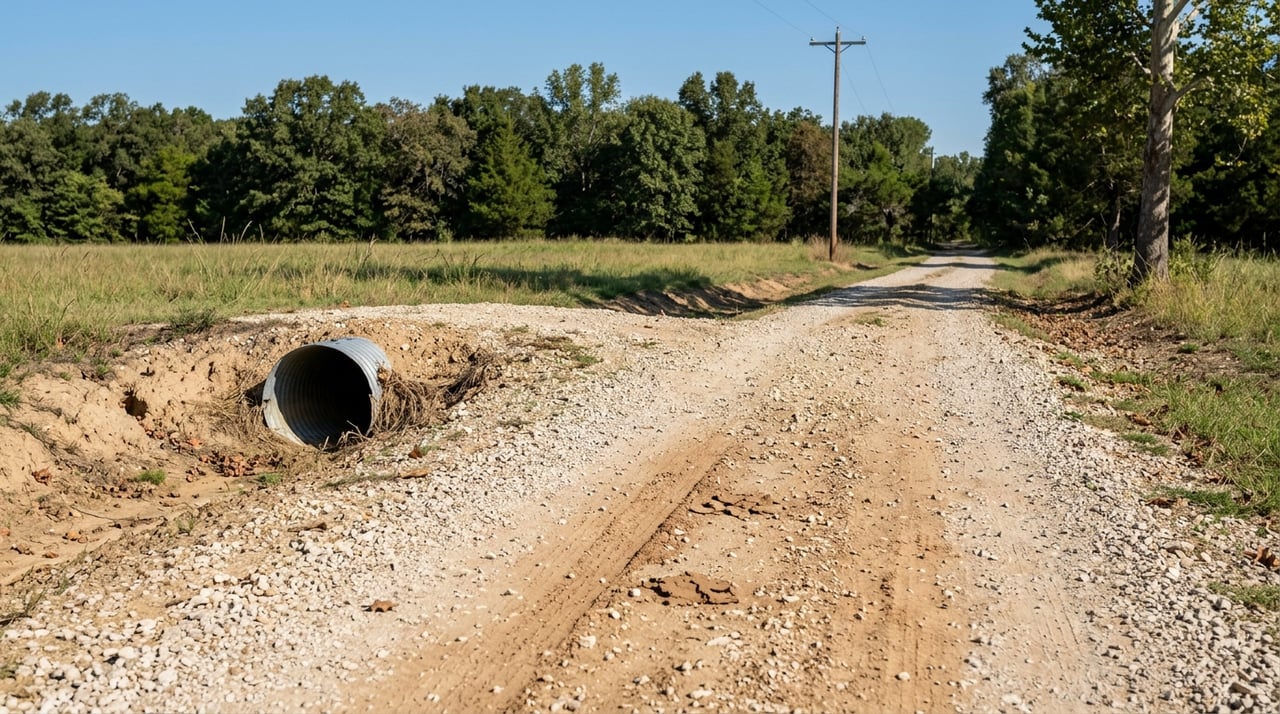
If the property will need a driveway culvert, utility line, or similar work that touches county right-of-way, check that early. Lincoln County’s permit materials show that underground or overhead installation in county right-of-way requires county permission.
The county’s road-crossing and utility packet also includes floodplain review. That is a strong sign that drainage and right-of-way questions should be part of your early due diligence, not a last-minute surprise.
Water and septic can shape the deal
Know the water source
On acreage, water is not a small detail. Ask whether the tract has an existing well, a rural water connection, or both.
Your intended use matters too. The Oklahoma Water Resources Board says domestic groundwater use does not require a permit, but non-domestic uses do, and permit applications must be filed before groundwater is taken or a groundwater well is drilled.
If you are thinking beyond basic household use, that should be part of your planning from the start. A home site, a few animals, and a more intensive use can lead to very different questions.
Review septic requirements
If the property is not connected to sewer, you will likely need an on-site sewage system. Oklahoma DEQ materials say soil testing is part of the approval process, and that testing can be done by DEQ or a certified soil profiler.
OSU land-buyer guidance also notes that when a private water well is used, the minimum lot size is typically 0.75 acres. That does not mean every tract is automatically build-ready, but it does show why lot size, soils, and utilities need to be reviewed together.
Soils matter more than most buyers expect
A beautiful piece of land can still be tricky if the soil does not fit your plans. Soil conditions can affect septic suitability, pasture potential, drainage, and where you may want to place a home, barn, or other improvements.
The official NRCS source for soil information is Web Soil Survey, which can generate reports for a county or a specific property. In practical terms, this gives you a solid screening tool before you get too far into a purchase.
Lincoln County buyers also have a useful local resource through OSU Extension. Its agriculture resources include pasture management plus soil, forage, and water testing, which can be especially helpful if you are evaluating a tract for productive use.
Fences and boundaries are not the same thing
A fence line may look like a boundary, but you should never assume it is one. On acreage, that mistake can create problems with access, livestock plans, utility placement, and neighbor relations.
Oklahoma law says adjoining owners are equally responsible for boundaries and fences. The law also says that if a survey shows a property line crossing an existing fence, the owner may not remove the fence or related improvements, including utility installation, until the adjacent owner receives notice, with further steps available if the parties do not agree.
That is one reason a recorded survey matters so much. It helps you understand which fence lines are actual boundary fences and which are simply interior livestock fences or older improvements.
Look closely at fence condition
If you plan to keep livestock, fence condition deserves a careful review before closing. Oklahoma law outlines what can qualify as a lawful fence and includes rules tied to boundary-fence maintenance and trespassing stock.
For buyers, the takeaway is simple. Check fence location, check fence condition, and make sure the setup matches the way you plan to use the property.
Watch for railroad edges
If the tract borders a railroad, there is another layer to review. The Oklahoma Corporation Commission has a separate lawful-fence process for railroad-adjacent property and says the railroad must be notified before applying for assistance.
That does not affect every buyer, but it is an important special case. If a listing backs up to a rail line, ask about it early.
Floodplain and drainage deserve a close look
In rural property, drainage can affect access, building plans, and maintenance costs. In Lincoln County, the fact that floodplain review appears in the same packet as road-crossing and utility work is a useful local clue.
If part of the tract sits in a floodplain or if planned improvements touch county right-of-way, you want to know that before closing. Even a simple driveway plan can change if drainage conditions are not what you expected.
This is one of those issues that may not stand out during a dry-weather showing. That is why document review matters as much as the site visit.
Confirm local rules tract by tract
Acreage buyers sometimes assume county rules work the same way everywhere. In Oklahoma, county land-use authority is statutory and can vary based on local structure, so it is smart to confirm tract-specific zoning, planning, subdivision, or special-use rules directly with the county and any city involved.
That matters even more if the property sits near a city boundary or if you have a specific use in mind. The right question is not “What usually happens?” but “What applies to this tract?”
Financing may look different on acreage
Financing raw land or working acreage can be different from financing a standard home purchase. If you are buying land for a working farm or ranch use, USDA Farm Service Agency Farm Ownership Loans are one public-program option to discuss with a lender.
According to the program information, eligible farmers and ranchers may be able to access up to 100 percent financing to purchase or enlarge family farms. That will not fit every buyer, but it is worth knowing if your purchase has a true agricultural purpose.
Questions to ask before you walk the property
Before or during a showing, keep a short list of practical questions with you:
- Which road serves the tract?
- Is access direct from a county road or through a recorded easement?
- Is there an existing well, a rural water connection, or both?
- Is there a septic permit or soil profile on file?
- Which fence lines are boundary fences and which are interior fences?
- Is any part of the property in a floodplain?
- Will planned improvements require county right-of-way review?
- Are there recorded surveys, plats, restrictions, or easements?
- Which school district serves the property according to county maps?
These questions can help you compare properties on more than looks alone. In Lincoln County, the best acreage decisions usually come down to usable facts, not just acre count.
Why local guidance helps
Buying acreage is rarely a one-size-fits-all process. Two tracts with the same number of acres can have very different value and usability based on access, records, utilities, soils, and boundary documentation.
That is where local, hands-on guidance can make a difference. When you work with a brokerage that knows Lincoln County, you are more likely to catch the questions that matter before they become expensive surprises.
If you are thinking about buying acreage in Chandler, Stroud, or elsewhere in Lincoln County, Premier Realty, LLC can help you look at the land through a practical local lens and move forward with confidence.
FAQs
What should you check first when buying acreage in Lincoln County?
- Start with legal access, the assessor parcel page, county land records, and any recorded survey, deed restrictions, plats, or easements.
Why do water and septic matter when buying Lincoln County land?
- Water source and septic suitability can affect whether the tract fits your intended use, and septic approval typically involves soil testing when sewer is not available.
Do fences show the true property line on Lincoln County acreage?
- Not always. A fence may not match the legal boundary, so a survey and record review are important before closing.
How can you check school district service for a Lincoln County property?
- Lincoln County provides school-district maps that can help you confirm the service area for a specific tract.
What local records help most before making an offer on acreage in Lincoln County?
- The most useful starting records are the county assessor parcel search, county land records, tax records, and any recorded surveys or easements tied to the property.